
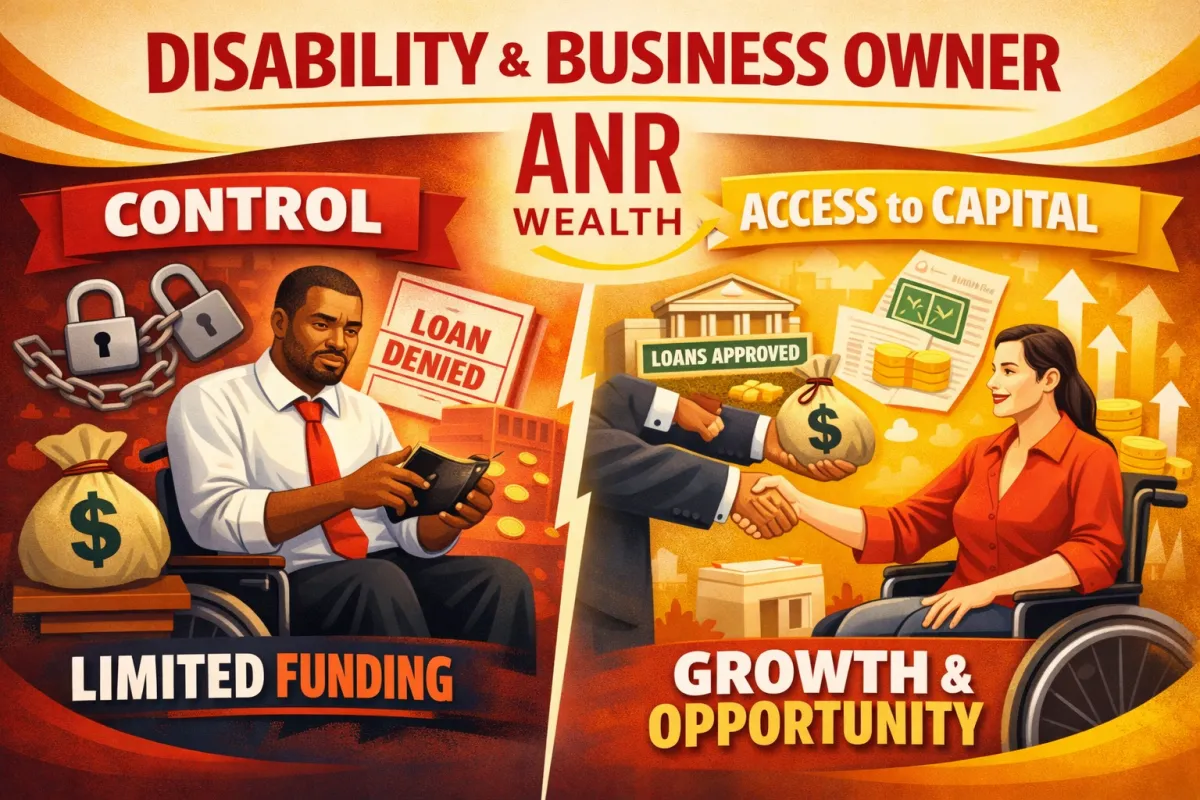
Disability of a Business Owner: Control vs Access to Capital
Disability of a Business Owner: Control vs Access to Capital
Most estate planning conversations assume death.
Disability is more disruptive.
When a business owner dies, there is a defined legal and tax process.
When a business owner becomes disabled, uncertainty sets in.
The owner is alive.
The shares are still legally theirs.
The business still exists.
But decision-making authority may stall.
And when authority stalls, access to capital follows.
This is not primarily a tax issue.
It is a control issue.
And control is what lenders, partners, and markets respond to when uncertainty appears.
This is usually where coordination matters, before anything goes wrong.
For a broader framework of estate tax and liquidity planning, see:
👉 Estate Tax Planning for Canadian Business Owners: What Actually Creates Control
https://anr-wealth.com/post/new-blog-postestate-tax-planning-canadian-business-owners
Why Disability Is Structurally More Fragile Than Death
Death triggers:
• Deemed disposition
• Share transfer
• Executor appointment
• Governance updates
There is clarity, even if painful.
Disability triggers:
• Medical uncertainty
• Potential incapacity rulings
• Legal ambiguity
• Delayed decision-making
The business may continue operating.
But if the owner cannot act:
• Who signs contracts?
• Who declares dividends?
• Who authorizes financing?
• Who makes strategic decisions?
Without clear governance planning, paralysis emerges.
The Power of Attorney Myth
Many business owners believe:
“My Power of Attorney covers everything.”
It does not.
An Enduring Power of Attorney (POA):
• Governs personal financial affairs
• May allow management of personal assets
• Does not automatically grant corporate authority
Corporations are governed by:
• Directors
• Shareholder agreements
• Corporate bylaws
If the disabled owner is the sole director:
• The POA does not automatically appoint a new director
• The corporation may legally lack decision-making authority
This distinction is rarely understood until tested.
What Actually Happens to Corporate Accounts
When incapacity becomes apparent, banks may:
• Request updated director resolutions
• Require proof of authority
• Freeze certain discretionary actions
Brokerage firms may:
• Restrict trading authority
• Require legal confirmation
If no secondary signing authority exists, activity can pause.
The assets remain.
Access becomes restricted.
This is where liquidity risk becomes real.
Debt and Banking Risk
If the owner personally guaranteed debt:
• Banks reassess risk
• Lines of credit may be reviewed
• Renewals may tighten
If the business relies on:
• Owner relationships
• Key client contracts
• Personal reputation
Disability introduces operational uncertainty.
Without liquidity buffers, small disruptions escalate quickly.
Insurance can stabilize this — but only if structured correctly.
For funding mechanics, see:
👉 Corporate-Owned Life Insurance in Canada: What Business Owners Need to Know
https://anr-wealth.com/post/corporate-owned-life-insurance-canada-business-owners
Shareholder Agreements and Disability Clauses
Well-drafted shareholder agreements include disability provisions.
These may:
• Define incapacity thresholds
• Trigger buyout mechanisms
• Establish valuation formulas
• Provide funding structures
But many agreements:
• Define disability vaguely
• Lack funding
• Leave decision-making unclear
If funding is not in place:
• Surviving shareholders face capital pressure
• The disabled owner’s family faces uncertainty
• Conflict escalates
Clarity must exist before disability occurs.
Disability Insurance vs Corporate Authority
Disability insurance replaces income.
It does not replace control.
A disability policy may:
• Provide monthly benefits
• Protect personal lifestyle
• Cover overhead expenses
But it does not:
• Appoint directors
• Move capital between accounts
• Fund shareholder redemptions
Income replacement and authority planning are separate issues.
They must both be addressed.
Holding Companies and Disability
Holding companies add another governance layer.
If the disabled owner:
• Controls the holdco
• Is sole director
• Is sole signing authority
Then:
• Intercompany dividends may pause
• Capital movement between entities may stall
• Estate planning structures may freeze
Many corporate structures that appear sophisticated on paper become fragile when authority is concentrated in one individual.
Structure without governance alignment increases fragility.
For structural comparisons, see:
👉 RRSP vs Holding Company: Estate Tax Implications
Estate Freezes and Disability
Estate freezes cap estate exposure.
They do not automatically solve disability authority.
If the founder holds:
• Voting preferred shares
• Director authority
• Trust control
And becomes incapacitated:
• Who exercises voting control?
• Who directs trustees?
• Who redeems shares?
Trust documents and corporate governance must be aligned intentionally.
For freeze mechanics, see:
👉 Estate Freeze Explained for Canadian Owner-Managed Businesses
The Liquidity Timeline in a Disability Scenario
Unlike death, disability unfolds.
• Week 1: Medical uncertainty
• Month 1: Operational adjustments
• Month 3: Strategic decisions required
• Month 6+: Financial strain appears
If liquidity and authority are unclear, the business may:
• Delay decisions
• Miss opportunities
• Lose lender confidence
• Trigger internal disputes
Disability planning is about preserving operational continuity during uncertainty.
Common Mistakes Business Owners Make
1. Planning Only for Death
Disability during peak earning years is statistically more probable than premature death, yet receives less structural planning.
2. Relying Solely on Insurance
Insurance replaces income. It does not replace governance.
3. Leaving Corporate Authority Concentrated
Single-director structures increase fragility.
4. Ignoring Documentation Alignment
Trust deeds, bylaws, and POAs must coordinate.
5. Assuming “We’ll Figure It Out”
Uncertainty compounds when no framework exists.
Questions Every Business Owner Should Answer
• If I am medically incapacitated for 90 days, who signs?
• Who can move capital between entities?
• Does my bank recognize alternate authority?
• Is my shareholder agreement disability-funded?
• Does my structure survive uncertainty?
If the answers are unclear, control does not exist.
Frequently Asked Questions
Does a Power of Attorney control my corporation?
Not automatically. Corporate authority is governed separately.
Is disability more common than death during working years?
Yes. Disability risk during prime earning years is statistically higher.
Can disability trigger a shareholder buyout?
It depends on the agreement terms.
Does insurance solve disability risk?
It addresses income replacement, not governance.
How often should disability planning be reviewed?
At major structural or valuation changes.
The Bottom Line
Disability does not remove ownership.
It removes clarity.
When clarity disappears:
• Authority stalls
• Capital freezes
• Confidence erodes
Estate tax planning is not just about death.
It is about maintaining control when you cannot act.
Because the business does not pause simply because you do.
To understand how disability planning integrates with broader estate strategy, revisit:
👉 Estate Tax Planning for Canadian Business Owners: What Actually Creates Control
https://anr-wealth.com/post/new-blog-postestate-tax-planning-canadian-business-owners