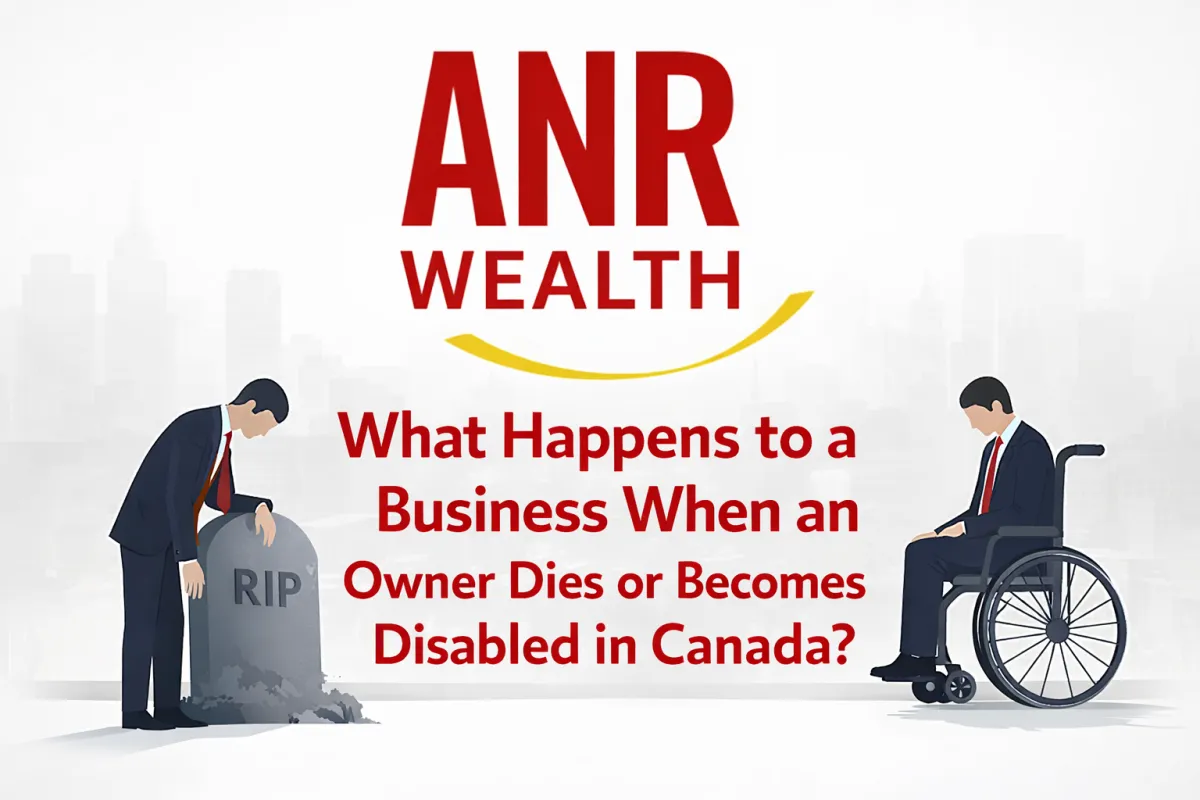
What Happens to a Business When an Owner Dies or Becomes Disabled in Canada
What Happens to a Canadian Business If an Owner Dies or Becomes
Disabled?
Most Canadian business owners believe some version of this:
“If something happened to me, my partners and my family would figure it out.”
That belief feels reasonable .It’s also the reason many good businesses unravel when life intervenes. Not because people didn’t care. Not because they were reckless. But because control was assumed, not defined.
A situation that starts like most success stories. Three partners launch a new business together.
Each brings something essential:
One drives sales and relationships
One runs operations
One manages finance and structure
They trust each other. The business is growing. Everyone is busy. Two years in, one partner dies. The moment everything changes, the shock is immediate. Then reality sets in. Questions surface, not strategic ones, but fundamental ones:
Who owns what now?
Who has legal authority to make decisions?
Can the business continue operating?
What happens to the deceased partner’s share?
The surviving partners aren’t just running a business anymore. They’re now in business with a grieving spouse, someone who never expected to be part of ownership, doesn’t understand the company, and is suddenly responsible for protecting their family’s future.
There is no agreement.
No funding for a buyout.
No shared understanding of what should happen next. Just assumptions colliding with reality. The Canadian reality most owners never test.
In Canada, ownership doesn’t pause for grief. When a business owner dies:
Their shares typically become part of the estate.
The executor (often a spouse) now has legal standing.
Decisions can stall until ownership and authority are clarified.
The business doesn’t collapse overnight, it freezes.
Why emotions hit harder than expected. Families are grieving and unsure. Partners are trying to keep the business alive. Liquidity may not exist to buy out an interest. Everyone wants to do the right thing, without a shared definition of what that is.
Sole owners aren’t immune.
For sole owners, different questions arise:
Who runs the business tomorrow?
Who signs cheques?
How long can operations continue?
What does the family actually inherit?
Many assume their will covers this. Often, it doesn’t, at least not quickly enough.
Disability: the most disruptive risk. Disability is uncertain and destabilizing.
Leadership becomes unclear. Income and authority are disrupted. Critical illness adds pressure, draining focus and cash. Different events, same issue, and controls were never tested.
Why this shows up so often in Atlantic Canada, many businesses are closely held, relationship-driven, and family-influenced. Trust is strong, until life intervenes.
Second-generation businesses feel this most acutely.
Where clarity and coordination change outcomes. Avoiding these situations isn’t about one document. It’s about sequence and coordination. Handled early, and in the same room, conversations with an accountant, financial advisor, and legal counsel surface tax structure issues, risk gaps, and ownership blind spots before they become urgent. When advisors work from the same information, planning is faster and calmer.
Before structure, most owners need clarity.
Above the horizon is clarity:
What outcome should this create for my family?
What should happen to the business if I’m not here?
Who controls decisions, and when?
What feels fair to everyone involved?
Below the horizon is execution:
Ownership agreements
Tax structure and funding
Risk and continuity planning
Legal alignment
When clarity comes first, structure works. The CONTROL question:
If I’m gone tomorrow, or unable to work, who controls decisions, ownership, and cash
immediately?
If that isn’t clear, the risk already exists.
Final thought:
Most owners don’t fail because they didn’t care. They fail because they trusted momentum more than clarity. This is usually where coordination matters most, while everyone still has the capacity to think clearly.